How to Stain a Deck: Deck Staining Guide
Wood decks need protection from the sun, moisture, and time. That’s where staining comes in—it adds color, shields the boards, and makes a big difference in how long the wood lasts. Knowing how to stain a deck the right way saves money and frustration later. Here’s what’s essential to know before starting and how each step works.
Best Time to Stain a Deck
Timing makes or breaks the results. A warm, dry stretch of days gives stain the chance to soak in and cure properly. One homeowner waited until late summer and had to deal with streaking and uneven finish from unexpected rain. Planning around the weather prevents that hassle.
- Pick days with temperatures between 50 and 90 degrees Fahrenheit
- Ensure no rain is forecast for 24 to 48 hours
- Stain in the morning or evening to avoid hot sun glare
Choose the Right Deck Stain
Different stains serve different purposes. Transparent stains let the wood grain show but need reapplication more often. Solid stains cover imperfections but last longer. Knowing which to use depends on how the deck looks now and how much maintenance is manageable.
- Use transparent stains for newer wood or clean grain visibility
- Apply semi-transparent stains for older wood with mild wear
- Go with solid stains for weathered decks needing more coverage
Clean and Prep the Deck Surface
Dirty wood won’t take stain evenly. Dust, mildew, and grease all interfere with how well stain sticks and absorbs. Power washing helps, but only if followed by a full drying period and light sanding to smooth any raised wood fibers.
- Scrub with a deck cleaner approved for exterior wood
- Rinse thoroughly and let dry for 48 hours minimum
- Sand lightly to remove splinters or fuzzy grain
Fix Damaged Wood Before Staining
Loose nails, warped boards, and rotten spots ruin the finished look. A little prep now avoids bigger repair jobs later. Boards that flex underfoot or show signs of rot should be replaced completely.
- Tighten or replace popped nails with coated screws
- Check joists and supports for signs of decay
- Swap cracked or rotted planks with treated lumber
Protect Surrounding Areas
Stain splatter ruins siding, grass, or patio furniture fast. Getting ready with drop cloths and tape takes just minutes. Many people skip this part and regret it after seeing drips on stone or vinyl.
- Cover bushes and grass with canvas or plastic sheets
- Use painter’s tape around posts and railings
- Move furniture and grills out of the way
Apply Deck Stain Evenly
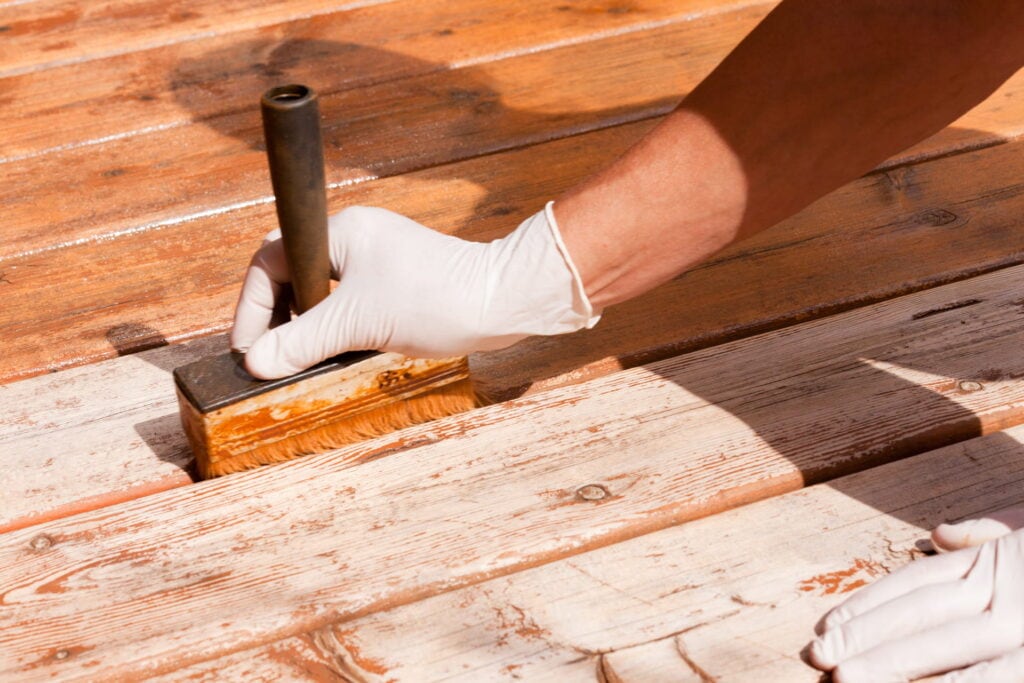
There’s more than one way to get stain onto the boards, but not every method suits every deck. Brushes offer control, rollers are faster, and sprayers can leave a mess if not handled carefully. Work along the grain, not across it, and don’t stop in the middle of a board.
- Start at one end and finish each board before moving on
- Blend brush or roller strokes to avoid lap marks
- Use a stain pad for edges and between tight spaces
Let the Stain Dry Properly
Rushing this step ruins all the effort. Humidity, temperature, and type of stain all affect drying time. Some stains look dry on the surface but remain tacky underneath for hours or even a full day.
- Allow at least 24 hours before walking on the deck
- Wait 48 to 72 hours before placing furniture back
- Keep pets and kids off until fully cured
Apply a Second Coat if Needed
Some decks need just one coat. Others benefit from a second, especially if the wood absorbed the first quickly. Apply the next coat while the first is still slightly tacky or fully dry—never when the stain is half-cured.
- Check the manufacturer’s label for second coat instructions
- Reapply on high-traffic or sun-heavy sections first
- Avoid applying too thickly to prevent tackiness
Maintain a Stained Deck Yearly
Even the best stain fades with time. A quick annual check can catch wear early and extend the life of the finish. Most decks need to be restained every 2 to 3 years, according to the U.S. Forest Products Laboratory.
- Inspect for peeling, fading, or patchiness each spring
- Clean the surface twice a year with a soft bristle brush
- Spot stain problem areas rather than starting over completely
Deck Staining Guide Key Takeaways
- Dry weather and the right stain choice are essential
- Surface preparation decides how well the stain performs
- Two coats aren’t always required, but maintenance always is
Frequently Asked Questions About Deck Staining
-
How often should a deck be stained?
Most decks benefit from staining every 2 to 3 years, depending on sun exposure and foot traffic. -
Can I stain a wet deck?
No. Wood must be completely dry before staining, which typically takes 48 hours after washing or rain. -
Is it better to spray or brush deck stain?
Sprayers work well for large areas, but brushing provides better control and deeper penetration into the wood grain. -
Do I need to sand the deck before staining?
Light sanding helps smooth the surface and improves stain adhesion, especially after power washing. -
What happens if it rains right after staining?
Rain can wash away or blotch the stain if it hasn’t cured, potentially requiring a full redo.
via Ponderosa Painting ponderosapainting.net/how-t...
